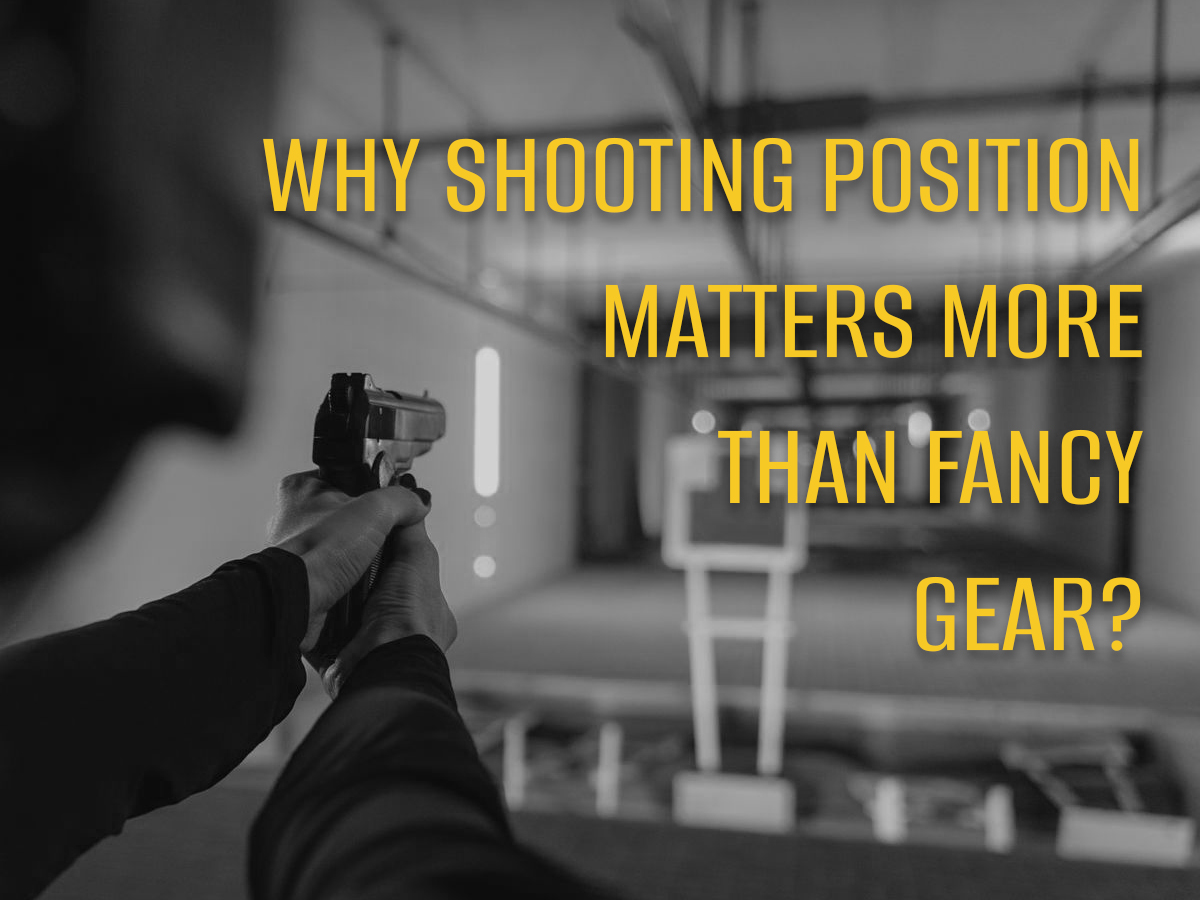
A polished optic, a new stock, and a full range bag can add comfort and capability to your rifle. However, no accessory can correct poor balance, weak shoulder contact, or an awkward stance. Your shooting position creates the foundation for every shot.
A stable shooting position helps you control the rifle, align the sights, press the trigger, and manage recoil. Fancy gear can support those fundamentals, but your body still has to do its share of the work. Think of it this way: racing tires help a car, but they cannot save a driver who treats the steering wheel like a tambourine.
Always follow range commands and standard firearm safety rules. Keep the muzzle in a safe direction, keep your finger away from the trigger until you intend to fire, and confirm your target and backstop.
A Strong Shooting Position Starts With Balance
Balance matters before you even raise the rifle. If your weight sits too far back, recoil can push your upper body out of position. If you lean too far forward, your muscles have to fight to keep you upright.
Place your feet at a comfortable width and keep your knees loose. Shift your weight slightly toward the balls of your feet. Your shoulders should stay ahead of your hips without an extreme forward lean.
This shooting position lets your body absorb recoil without a dramatic backward wobble. You want “stable and ready,” not “person who just stepped onto a moving bus.”
Let Your Body Support the Rifle
Muscles tire faster than bones and joints. A good shooting position uses body structure to support rifle weight whenever possible.
From a one-knee position, place your support elbow near the inside of your knee or rest it above the kneecap. Direct contact on the kneecap can create an unstable bone-on-bone connection. In a prone position, place both elbows on the surface and let your upper body form a solid base.
Even an upright position benefits from smart structure. Keep your support elbow in a natural place and avoid unnecessary tension. The goal does not call for a wrestling match with the rifle.
Build Consistent Contact Points
The rifle should touch your body in the same places for each shot. These contact points include the shoulder, cheek, firing hand, and support hand. Small changes can alter sight alignment and recoil movement.
Place the stock in the same shoulder pocket each time. Set your cheek at a comfortable point on the stock and keep your head upright enough to see the sights clearly. Use firm, even hand pressure without a white-knuckle squeeze.
The official guide to standing position shooting also stresses consistent shoulder contact, balanced pressure, breath control, and smooth trigger input. Those simple details provide far more value than an accessory that looks impressive but cannot fix poor form.
Match the Position to the Task
No single shooting position fits every range exercise. An upright stance offers speed and freedom of movement. A one-knee position lowers your center of gravity and provides extra support. The prone position gives you excellent stability when range rules and terrain allow it. A bench rest creates a useful baseline for zero confirmation and ammunition checks.
The ZPAPM70 ZR7762SR provides a dependable platform for this type of practice. Zastava Arms USA lists a 1.5-millimeter receiver with a bulged trunnion, a cold-hammer-forged chrome-lined barrel, adjustable iron sights, and Serbian Red furniture. A solid rifle plus a repeatable shooting position gives you clear, useful target feedback.
A Good Position Helps Control Recoil
Recoil does not end when the rifle moves rearward. It also affects how quickly the sights return to the target. A balanced shooting position directs recoil through the shoulder and into the torso. That helps the rifle return along a predictable path.
Keep the stock firm against the shoulder and maintain even pressure with both hands. Do not relax immediately after the shot. Hold your position, watch the sights, and complete your follow-through.
The ZPAPM90 offers an accurate, easy-to-control 5.56×45/.223 platform with an adjustable gas system. Its features support control, while a sound position helps the shooter use that capability consistently.
Position Makes Target Feedback More Useful
A group can reveal trigger errors, sight changes, or inconsistent body contact. However, you need a repeatable shooting position before you can trust that evidence.
If your shoulder contact, cheek placement, or support-hand pressure changes between shots, the group may move even when the sights remain correctly adjusted. Zastava’s guide to point-of-impact shifts recommends a consistent position, ammunition type, distance, sight picture, rest, and pace. This approach turns a confusing target into useful information.
Before you adjust gear, repeat the group from the same position. Sometimes the wrench can stay in the bag. Your elbows may need the adjustment instead.
Practice the Position With a Simple Routine
Choose one shooting position per short practice block. Fire a slow group, rest, and then rebuild the position from the start. Check foot placement, balance, stock contact, cheek position, grip pressure, sight picture, and breath rhythm.
Use groups of three to five shots so fatigue does not take control. Record the position, distance, ammunition, and group size. The article about common range mistakes also recommends a deliberate range plan and practice beyond the bench.
This routine helps you identify which position feels natural and which one needs more attention.
Let Fundamentals Guide Gear Choices
Gear still has an important role. A stock that fits your body, a comfortable handguard, or properly mounted sights can improve the connection between you and your Zastava. Yet those choices work best after you understand your natural shooting position.
Build the position first. Note any genuine fit issue. Then choose equipment that supports a clear need. This order helps you create a practical Zastava setup instead of a rifle that carries every accessory except a coffee holder.
Final Thoughts
A strong shooting position costs nothing, fits in every range bag, and works with every Zastava range session. It improves balance, sight alignment, recoil control, follow-through, and shot-to-shot consistency.
Start with your feet, build stable contact, relax unnecessary tension, and repeat the same setup. Zastava Arms USA provides sturdy, capable rifles that reward sound fundamentals. Give your Zastava a dependable foundation, and the results on the target will speak much louder than fancy gear.