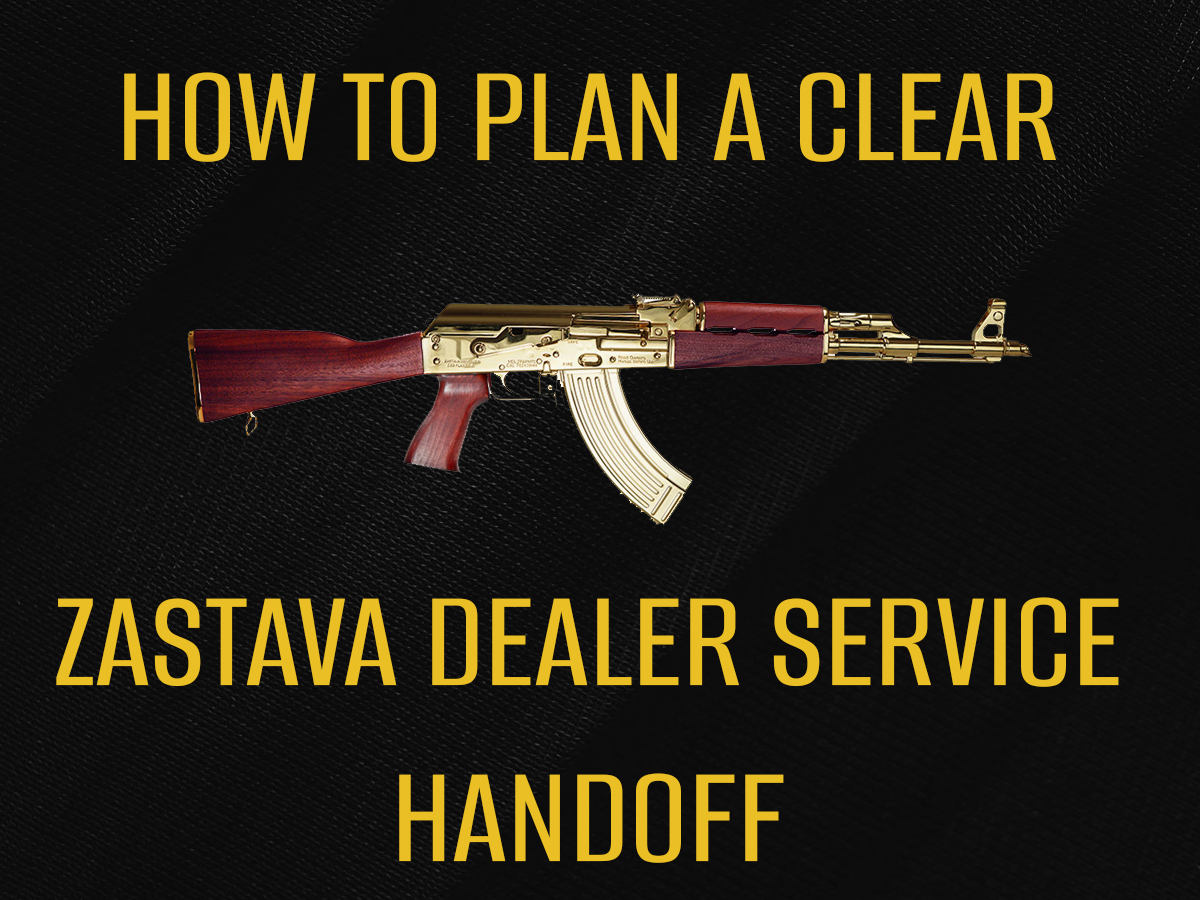
A Zastava dealer service handoff should transfer the firearm, the relevant facts, and responsibility through a clear, lawful process. The dealer needs to know what you observed, what work has occurred, and what our current instructions require. You need confirmation of who accepted the firearm, what happens next, and how status updates will arrive.
Confirm the Correct Dealer First
Use our dealer locator as a starting point, then contact the dealer directly. Confirm the address, business hours, license status as appropriate, service capabilities, appointment requirements, and whether the dealer can handle the specific transfer or warranty step.
Do not arrive with a firearm based only on an old directory screenshot. Businesses, procedures, and schedules can change.
Explain the Purpose Before the Visit
Tell the dealer whether the visit concerns inspection, a possible warranty issue, authorized service, or another lawful need. Provide the exact model and a short description, but keep sensitive personal details within the proper channel.
Ask what documents, case, locks, identification, or prior authorization the dealer requires. A five-minute call can prevent a long drive followed by a very short conversation at the counter.
Review Our Current Warranty Instructions
Read our warranty page before you arrange a warranty handoff. The current policy says that owners must obtain return authorization before a warranty return and must not ship a firearm directly to us. Follow the written policy and any case-specific instructions you receive.
Federal, state, and local requirements can differ. The dealer and appropriate authorities should confirm the rules that apply to your location and situation.
Prepare a One-Page Issue Summary
Write the model, purchase date, approximate round count when relevant, ammunition details, date of the first symptom, and a neutral description of what occurred. Add the service or maintenance history that directly relates to the concern.
Keep the summary short enough to scan at the counter. Attach photographs or longer records separately. A clear timeline beats three pages of theories and a sentence that says, “It just does the thing.”
Separate Facts From Diagnosis
Describe observable behavior: where a control stopped, what sound occurred, when a mark appeared, or which condition changed. Do not assign a defective part unless a qualified professional has confirmed it.
State what you did after the issue appeared. If you stopped use, secured the firearm, and contacted support, include those facts because they explain the current condition.
Leave the Firearm in a Safe, Documented Condition
Follow the manual and the dealer’s instructions for unloading, casing, and arrival. Keep ammunition separate as required by law and policy. Do not attempt a final test immediately before the handoff.
Remove unrelated accessories only when instructed and record everything that remains with the firearm. List each magazine, optic, case, lock, or other item accepted by the dealer.
Protect Private Information
Carry the documents the dealer requests, but do not leave unrelated personal records in the case. Remove spare keys, address labels, range cards, and paperwork that does not support the service process.
Share serial and purchase details only with authorized parties through secure channels. A service counter is not the place to spread documents across a public social-media post.
Ask for a Written Intake Record
The receipt or intake document should identify the dealer, date, firearm, items received, stated purpose, and next expected step. Review it before you leave and ask for correction if an important fact is missing.
Keep the original or a secure copy with your ownership records. Photograph the document only if you can store the image privately.
Confirm Who Will Communicate
Ask whether the dealer or our team will provide updates, which reference number applies, and when you should follow up. Write down the contact name and preferred channel.
Avoid sending daily messages through several channels. One clear reference and one agreed contact route make the history easier for everyone to follow.
Resolve Unclear Steps Before Transfer
If the dealer’s instruction conflicts with a written authorization or our current policy, pause and use our official contact page for clarification. Do not improvise shipment or transfer steps.
A clear Zastava dealer service handoff combines verification, safe preparation, concise records, and written custody details. When every party knows what was received and what comes next, the service process starts with facts instead of avoidable detective work.