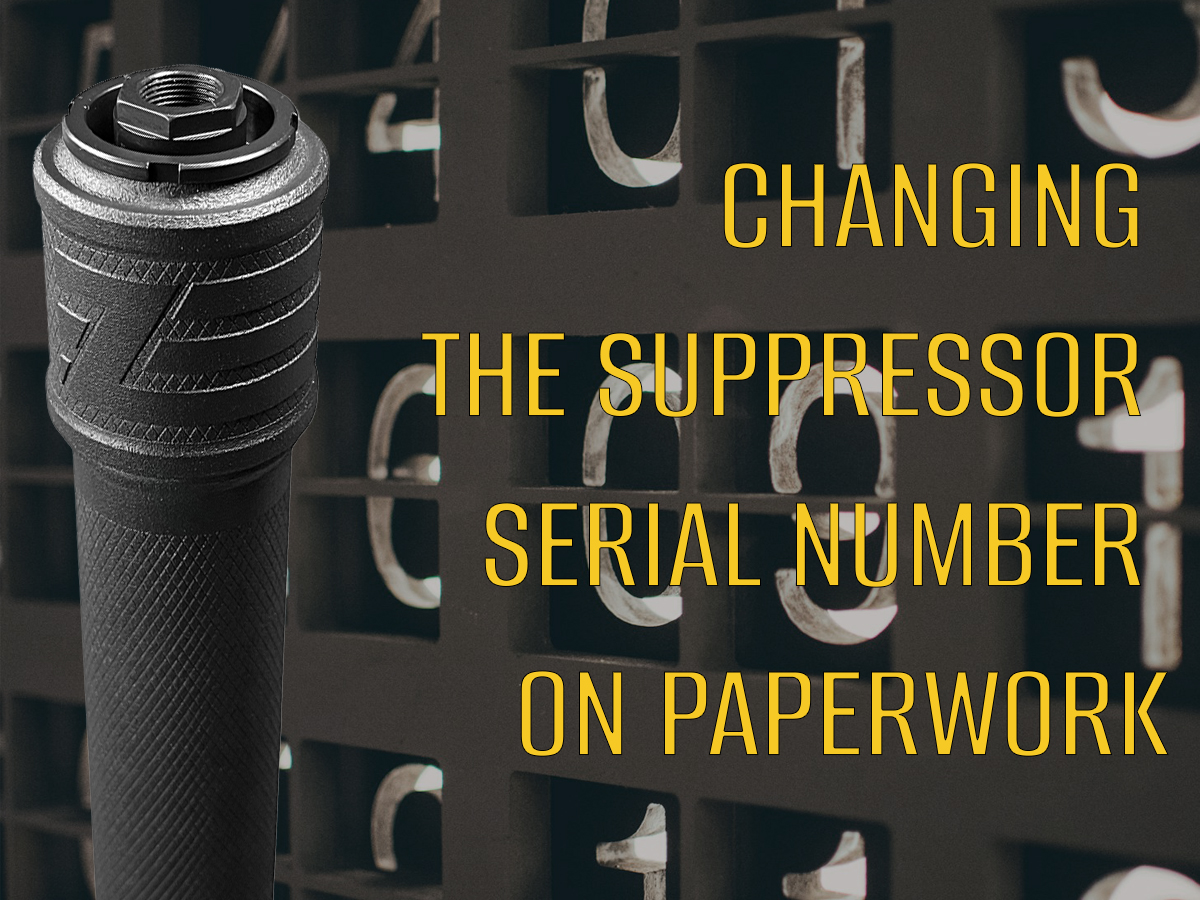
You check your paperwork, sip your coffee, and then your soul leaves your body for a second. One digit looks off. Now the big question hits: can you change the suppressor serial number on paperwork if you spot a typo?
The calm answer: yes, you can fix an error in the paperwork record, but you should not try to “fix” the serial number on the suppressor itself. The serial number belongs on the suppressor exactly as the maker marked it, and ATF treats that marking as part of the firearm’s required identification. If the paperwork shows the wrong number, you need a paperwork correction, not a home-brew rewrite of reality.
Why The Serial Number Matters So Much
With NFA items, the serial number does not serve as a cute administrative detail. It identifies the specific suppressor in the registration record. ATF regulations require licensed makers and importers to mark firearms with a unique serial number, and the National Firearms Act record tracks that identifying information. If you need to change the suppressor serial number in the record because the paperwork shows a typo, accuracy matters down to the last character.
That means one ugly truth: “close enough” does not count. “Looks like an 8, maybe a 3, hard to say” does not count either. Your paperwork should match the marking on the suppressor.
The First Rule: Do Not Alter The Suppressor
Let’s make this part crystal clear. If the suppressor itself bears a proper serial number from the manufacturer, that is the number that counts. You do not scratch in a new digit, file anything down, restamp anything, or decide that your penmanship deserves federal recognition. Federal regulations treat the manufacturer or importer serial number as the actual identifying mark.
So if you want to change the suppressor serial number, the real task involves the paperwork record, not the can. The can stays exactly as marked by the manufacturer.
What You Should Do If You Spot A Typo Before Submission
If you catch the typo before the application goes out, life looks much better. At that stage, the dealer, transferor, or preparer should correct the application so the serial number matches the suppressor exactly. ATF’s eForm 4 system includes built-in validation features that aim to reduce errors before submission, which helps, but it still pays to check every digit yourself. (ATF)
This moment calls for a slow, boring checklist:
Check the suppressor itself.
Check the box, label, or manufacturer paperwork.
Check the draft form.
Check each letter, dash, and number again.
Then check once more because suppressor paperwork likes drama.
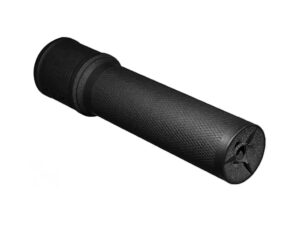
If you buy a Zastava can, start with the product details and installation resources for the Zastava ZVUK Titanium AK Suppressor. Zastava also offers helpful reading on fit, setup, and support gear in ZVUK 101: What Makes Zastava’s Titanium AK Suppressor Different? and Caliber and Thread Guide: Running ZVUK on 7.62×39. Those resources help you confirm the can and setup details before paperwork ever becomes a problem.
What You Should Do If You Spot A Typo After Submission Or Approval
Now we reach the part that raises blood pressure. What if you already filed the form, or worse, you received the approved registration document and only then noticed the typo?
Here, ATF’s own NFA guidance gives a direct path. If the registration document contains an incorrect description, the owner should write to the Chief, NFA Branch, request correction of the registration record, describe the problem, and provide the correct information. If the error involves the serial number, ATF requires close-up photographs or a pencil rubbing of the actual serial number. ATF also says you should include a copy of the registration document and keep a copy of your correction request with that registration document until ATF acknowledges the correction. (ATF)
So yes, you can change the suppressor serial number in the paperwork record when a typo exists, but you do it through the correction process. You do not freestyle the fix.
Who Should Handle The Correction?
That depends on where the typo appeared and when you found it.
If the application has not gone in yet, your dealer or transferor should correct the form before filing. If the form already went in, contact the dealer or transferor first, then contact ATF through the proper channel tied to the form type. ATF’s eForms page lists contact information for eForm 4 questions, including the eForms support email and phone number. (ATF)
If the issue appears on the approved registration document, the registrant should request a correction from the NFA Branch as described in the ATF handbook. That point matters because the goal is not just to “note the typo.” The goal is to update the official registration record so it matches the suppressor’s actual marking. (ATF)
What Evidence Helps You Fix The Error Fast
When you ask ATF to change the suppressor serial number in the record, clean documentation helps. The ATF handbook specifically mentions close-up photographs or a pencil rubbing for a serial-number correction, plus a copy of the registration document. (ATF)
Smart owners usually also keep:
A clear photo of the suppressor serial number
A copy of the submitted or approved form
Any dealer invoice or order record
Any box label or manufacturer paperwork that matches the can
That stack gives you a clean paper trail and cuts down on “wait, which number did we mean?” chaos.
How Typos Usually Happen
Most suppressor serial number mistakes come from painfully ordinary causes. Somebody reads a character too fast. Somebody mixes up a zero and the letter O. Somebody misses a dash. Somebody enters the number from a box label instead of the can itself. Then paperwork leaves the station and everyone acts surprised, as if keyboards have never betrayed humanity before.
This is why the phrase change the suppressor serial number often really means “correct the paperwork to match the real serial number already on the suppressor.” The physical marking usually stays right where it should. The paper version takes the wrong turn.
How To Avoid The Problem In The First Place
A little paranoia helps here. Healthy paranoia, not “string on a corkboard” paranoia.
Before any submission, compare the serial number on the suppressor to the form character by character. Read it out loud. Make another person read it. Read it again in better light. If the suppressor runs on a Zastava setup, you can also use Zastava’s own support content to confirm your can, mount path, and host compatibility, such as Best Suppressor for ZPAP M70: What to Look For in 2025, Sound & Gas: Managing Blowback on AKs with the ZVUK, and Using Zastava Alignment Rods to Prevent Baffle Strikes. Those pieces do not replace ATF paperwork review, but they do help you keep the whole setup organized and squared away.
You can also keep accessories and maintenance items in one place, such as the ZPAP92 Suppressor Hub Adaptor listing and the Titanium ZVUK Suppressor Cover, then pair that with good maintenance habits from Post-Range Checks That Extend ZVUK Life. Organized gear tends to support organized paperwork. It sounds simple because it is simple.
A Good Zastava Setup Deserves Accurate Paperwork
If you invest in a suppressor setup, you want the fun part to involve range time, not number archaeology. Zastava built the ZVUK line around AK use, low weight, HUB compatibility, and blowback control. The product page and related Zastava articles highlight those features clearly, which makes the system easier to track and document from purchase to setup.
That is one more reason to keep the paperwork clean. A quality suppressor deserves correct records, correct fitment, and correct support documents from day one.
The Bottom Line
So, can you change the suppressor serial number on paperwork if you spot a typo?
Yes, when the paperwork record contains an error, you can request a correction. No, you should not alter the serial number marked on the suppressor itself. ATF’s published guidance points you toward a correction request with the right supporting proof, especially close-up photos or a pencil rubbing if the serial number itself needs correction in the record.
In plain English: fix the paper, not the metal.
And if you run a Zastava suppressor setup, keep your gear, your serial number photos, and your documents together from the start. That habit turns a potential headache into a quick correction instead of a full-blown “why did I not double-check that one digit?” moment.