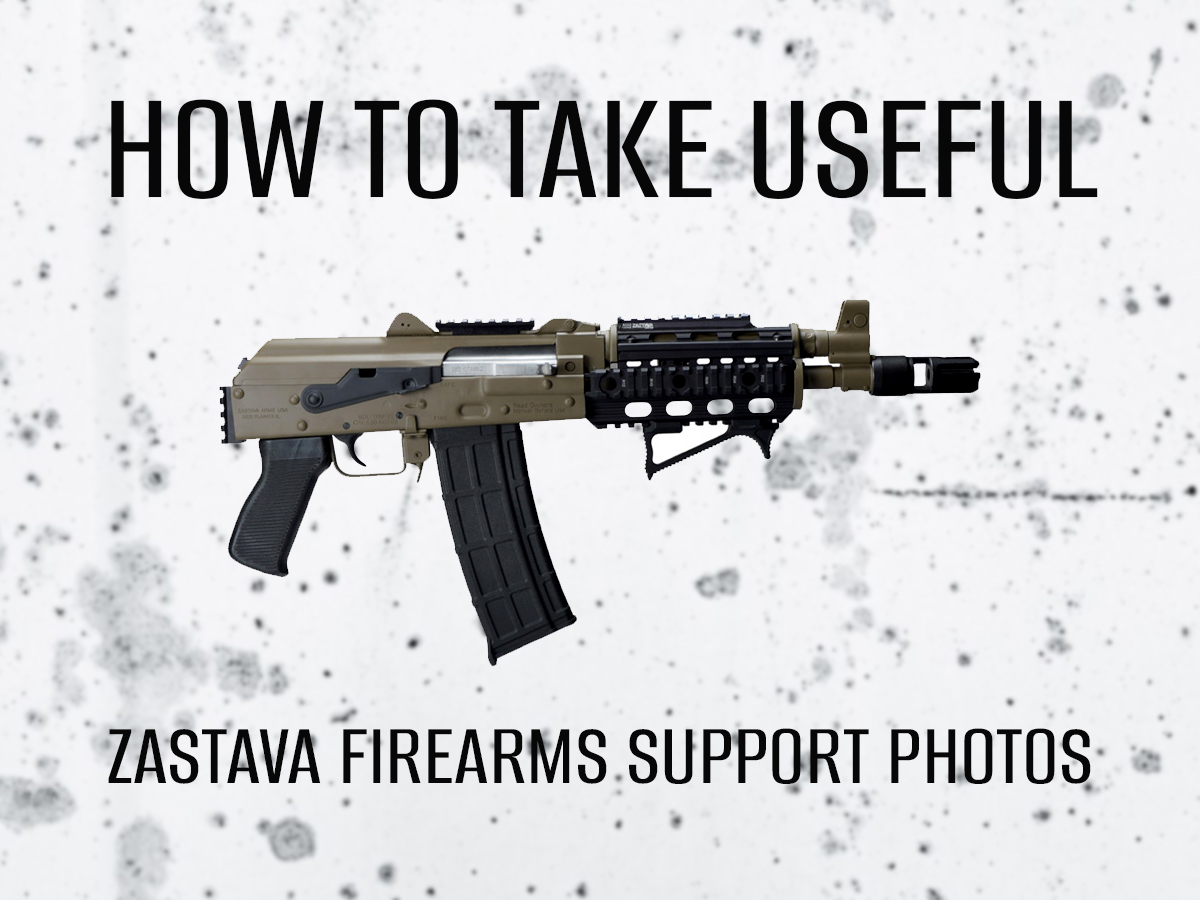
Useful Zastava firearm support photos can help our team understand what you see before we recommend the next step. A good set shows the correct firearm, the location of the concern, and enough context to interpret the detail. It should never require unsafe handling, live ammunition, disassembly beyond authorized instructions, or public exposure of private ownership information.
Make the Firearm Safe First
Follow the owner’s manual and the basic rules of firearm safety. Point the firearm in a safe direction, remove the magazine when applicable, open the action, and verify the unloaded condition according to the documented procedure.
Keep all ammunition outside the photo area. If you cannot maintain a safe condition while holding a camera, ask a qualified person for help or stop. No support photo deserves an awkward one-handed balancing act.
Use a Clear, Neutral Workspace
Choose a stable surface with good light and a simple background. Remove unrelated firearms, ammunition, paperwork, keys, mail, and anything else that reveals private information or distracts from the issue.
Avoid dramatic lighting and filters. Support photos need accurate detail, not the atmosphere of a movie poster. Daylight or a diffuse lamp often shows finish, alignment, and surface condition more clearly.
Begin With an Overall View
Take one image of the complete firearm from a useful side angle while it remains safely positioned. This establishes the model, orientation, and location of later close-ups.
Do not crop so tightly that the viewer cannot tell which area appears in the next image. Context saves several rounds of “Which side are we looking at?”
Add a Medium and Close View
Next, photograph the relevant area from a medium distance, then take one close image of the exact detail. Keep the same orientation when possible. A sequence of overall, medium, and close views creates a simple visual map.
Use the camera’s focus control and review each image at full size. A sharp photograph from slightly farther away has more value than a blurred close-up of heroic proportions.
Show Scale Without Blocking the Detail
If size matters, place a ruler or another neutral measuring reference beside the area without touching a sensitive part or covering the concern. Do not insert objects into the firearm or use tools merely to improve the photo.
Record the measurement in your message as well. Perspective can distort dimensions, especially when the camera sits at an angle.
Protect Serial and Personal Information
Do not post serial numbers, receipts, addresses, registration details, or case labels on social media. Send sensitive identifying information only through an official channel and only when our team requests it.
Our product registration page provides the official registration process. A photo attachment to a general message does not replace that form.
Describe What the Image Shows
Give each file a simple name such as “model-area-overall,” “left-side-detail,” or “surface-mark-close.” In your message, identify the image and state when you first noticed the concern.
Use neutral language. “The control stops at this position” gives us an observable fact. “This internal part failed” may claim more than the photograph can prove.
Do Not Recreate a Problem for the Camera
Never load the firearm, repeat a malfunction, force a component, or operate it unsafely to obtain a more convincing image. If the condition may affect safety, keep the firearm unloaded and secured until qualified guidance says otherwise.
Review our current warranty information before any alteration or unauthorized work. A photograph should document the condition, not change it.
Keep the Image Set Focused
Choose the few photographs that best explain the issue. Ten nearly identical files can hide the one useful angle. Include extra views only when they add location, scale, or a meaningful difference.
Keep the original files until the question closes. Message apps and screenshots may reduce resolution, remove metadata, or crop important edges.
Send the Right Context With the Photos
Use our official contact page for maintenance and general inquiries. Include the exact model, purchase context when relevant, a short factual timeline, and the safe condition of the firearm. Follow any additional instructions our team provides.
Useful Zastava firearm support photos protect safety and privacy while making the concern easier to understand. An unloaded firearm, clear background, three useful distances, neutral description, and official communication channel usually tell a better story than a folder full of mysterious close-ups.