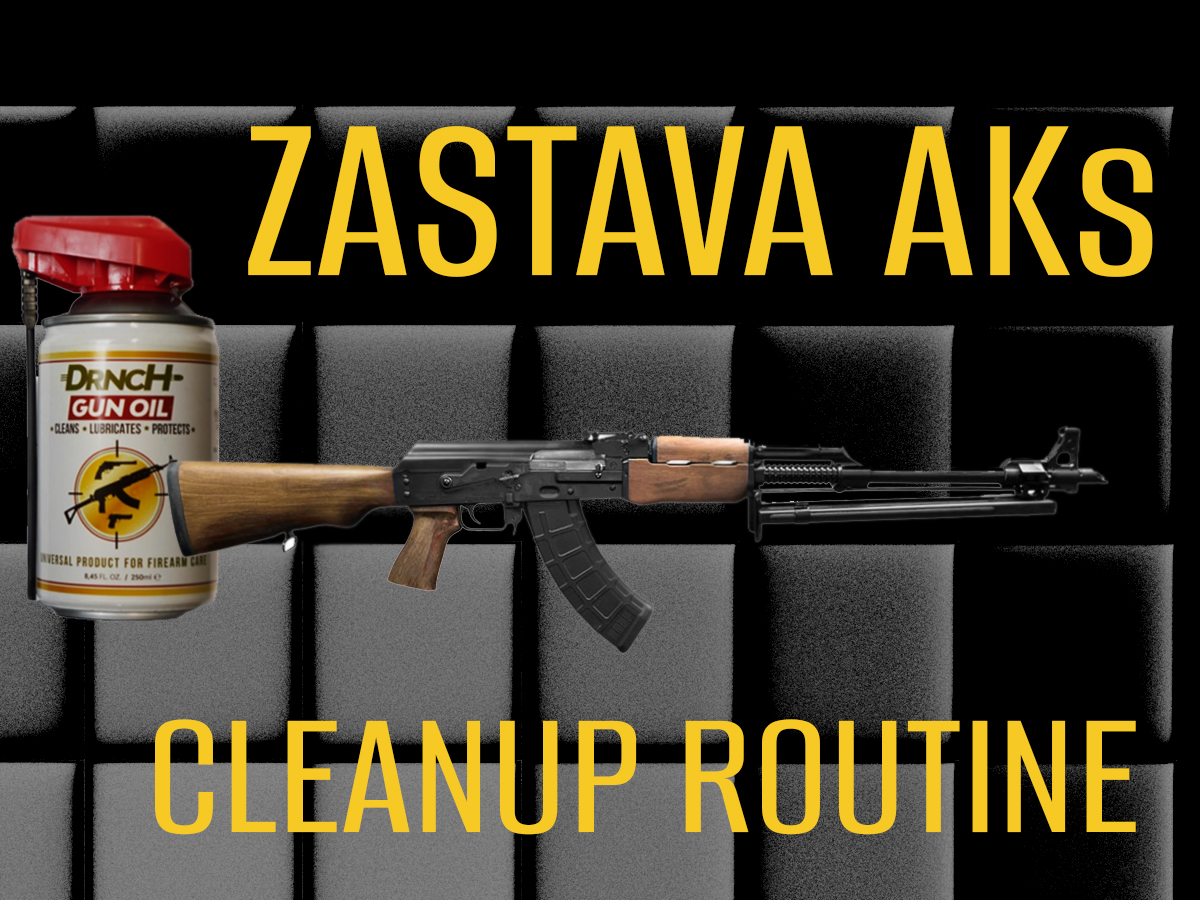
A good cleaning routine that prevents rust does not need a three-hour ceremony, a laboratory coat, or emotional support. It needs a few smart steps, a little discipline, and the good sense to stop moisture before it throws a party on your rifle.
Zastava owner manuals tell you to clean the rifle as soon as possible after firing, wipe it dry, lubricate the bore, and apply a light coat of oil before storage to reduce the chance for corrosion to start.
Zastava Arms USA also sells DRNCH, a cleaner-lube-protectant that the company describes as suitable for cleaning, lubrication, and short-term preservation, with corrosion protection and low-temperature use.
Why A Fast Cleanup Wins
The best cleaning routine that prevents rust usually looks boring. That is the point. Rust loves delay, fingerprints, damp air, range residue, and the classic phrase, “I’ll handle it tomorrow.” Zastava’s manuals say the rifle should get cleaned as soon as possible after firing, wiped dry, and then lubricated, because oil helps dissolve soot residue and leaves less opportunity for corrosion to begin. The same manuals also advise a thorough cleaning and light lubrication before storage, plus periodic cleaning even when the rifle has not fired, especially after exposure to dust, rain, snow, or dew.
That advice matters even more on an AK-pattern rifle, because fouling collects in predictable places. Zastava’s own maintenance content points to the piston face, gas tube, bolt tail, extractor recess, chamber, receiver rails, and muzzle threads as common trouble spots. Ignore those spots and grime stays put. Catch them early and cleanup stays easy.
What You Need On The Bench
A cleaning routine that prevents rust starts with a short list, not a mountain of gadgets. Zastava manuals call for a cleaning rod, lubrication brush, cotton flannel patches, lubrication oil, and gun-cleaning solution for powder deposits. That gives you the core kit already. Zastava Arms USA’s current maintenance content also supports a simple field-ready setup rather than a giant pile of supplies.
A practical Zastava-centered kit looks like this:
- Cleaning rod or bore tool
- Bore brush and patches
- Nylon brush
- Clean cloth or shop rag
- Small pick for stubborn carbon, used gently
- Light oil or cleaner-lube-protectant such as DRNCH
- Dry storage space and a locked cabinet
DRNCH fits this role well on paper because Zastava Arms USA describes it as a synthetic liquid for cleaning, lubrication, and short-term preservation. The product page also says it provides protection against corrosion, works at very low temperatures, and suits rifles along with other equipment.
The 10-Minute Cleaning Routine That Prevents Rust
Here is the simple cleaning routine that prevents rust most Zastava AK owners can repeat after a normal range session.
First, unload the rifle and field strip it according to the owner manual. Zastava manuals outline removal of the dust cover, recoil spring assembly, bolt carrier with bolt, and gas tube.
Next, wipe the obvious fouling off fast. Start with the bolt carrier, bolt, piston, and inside the receiver. Zastava’s AK carbon-fouling guide recommends attention to the piston face, bolt tail, carrier channel, extractor claw, chamber, rails, and hammer contact points.
Then clean the bore. Run a solvent-wet patch from chamber to muzzle, brush it, and follow with clean patches until they come out clean. Zastava manuals tell owners to keep at it until the patch no longer shows dirt, then lubricate the bore lightly.
After that, hit the gas system. Wipe the piston and brush the gas tube interior lightly. Zastava’s blog guide for a ZPAP after a range day specifically calls for a DRNCH-damp cloth on the piston and a nylon or small brass brush for buildup around the ring behind the piston head.
Now check the small rust magnets: the extractor recess, receiver rails, and muzzle threads. Zastava’s own content singles out those areas because carbon and residue like to hide there. If your rifle uses a muzzle device, remove it when appropriate, wipe the threads, and keep that shoulder clean.
Then apply a light coat of protectant. Light matters here. Zastava manuals advise a light coat of high-quality gun oil on well-cleaned metal surfaces and warn you to remove excess lubrication. That means you protect the metal without turning the rifle into a greasy sandwich.
Finally, reassemble the rifle, function check it, and store it in a dry locked cabinet. Zastava manuals explicitly recommend a dry room and safe locked storage.
Where Rust Usually Starts First
Every cleaning routine that prevents rust improves when you know where rust likes to sneak in first.
On a Zastava AK, pay extra attention to:
- The bore after firing
- The gas piston exterior
- The bolt tail and extractor area
- The receiver rails and contact points
- The muzzle device and threads
- Any metal surface you touched with bare hands
That last one sounds minor, but Zastava’s homepage description for DRNCH says the product neutralizes fingerprints, which tells you those prints matter enough to address directly. The same site description also states that DRNCH offers corrosion protection for up to 30 days.
What To Do After Rain, Snow, Or Humid Range Days
A cleaning routine that prevents rust becomes even more important when weather acts rude. Zastava manuals state that when the rifle gets carried outside and faces dust or moisture such as dew, rain, or snow, it requires cleaning and lubrication even if you did not fire it. That is about as direct as maintenance advice gets.
So if your Zastava AK spends time in wet air, do this the same day:
Wipe all exterior metal dry.
Field strip the rifle.
Check the bore and chamber.
Wipe the bolt, carrier, piston, and receiver.
Apply a thin protective film to cleaned metal surfaces.
Store the rifle only after it sits dry.
That is not overkill. That is how you win the rust argument before rust gets a vote.
How Often Should You Do A Full Clean?
The smartest cleaning routine that prevents rust has two levels: quick cleanup after each session and deeper cleaning on a regular cycle.
Zastava owner manuals say to clean as soon as possible after firing, and Zastava’s AK carbon-fouling article adds a practical rhythm: wipe-down and relube after each unsuppressed range day, with a fuller cleaning every 500 to 750 rounds or sooner if the rifle starts to feel sluggish. If the rifle sees dust, rain, winter conditions, or suppressor use, the cadence should tighten.
That makes sense for real owners. A short cleanup after every range session keeps grime from hardening. A deeper clean later keeps the rifle smooth and ready. Your Zastava does not ask for drama. It asks for consistency.
Final Thoughts
A solid cleaning routine that prevents rust does not demand perfection. It demands timing. Clean your Zastava AK soon after range time, wipe it dry, protect the metal with a light coat of oil or DRNCH, and store it in a dry locked space. That simple pattern matches Zastava’s own manuals and current maintenance guidance. Keep the routine short, repeatable, and honest, and your rifle stays ready instead of turning into a science project with a safety selector.
If you want, I can also make this into a version formatted directly for WordPress, with H2/H3 structure and internal links inserted exactly where they should go.