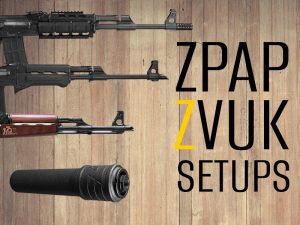
Your ZPAP does not need baby gloves. It needs eyes, a rag, and about five minutes of honesty every now and then. If you keep up with ZPAP wear points, you get the best kind of long-term relationship: boring reliability.
Zastava already builds these rifles to run through grime and heat. Carbon still rides the gas system and parks itself on high-friction parts like the bolt carrier group, piston, gas tube, chamber area, and extractor area. That reality does not scare a ZPAP. It just means you win by staying consistent.
Before we talk about round counts, lock in the baseline: Zastava’s owner’s manual calls for proper maintenance, with attention before use, soon after range time, and before storage. It also warns you to keep the bore clear and to keep lubricant off ammo.
The ZPAP Wear Points That Matter Most
Think in “contact zones,” not mystery. Zastava’s own guidance and tech articles keep circling the same areas:
- Bolt face, lugs, extractor claw, and carrier raceway
- Receiver rails, bolt lugs, carrier rails, and hammer contact points
- Chamber and gas parts (where carbon loves to hide)
- Magazines, mag catch, and basic trigger group contact surfaces
Those spots define your core ZPAP wear points. Now let’s time-box the work.
At 500 Rounds: The “Break-In Reality Check”
At 500 rounds, you do not hunt for problems. You confirm everything seats, cycles, and locks up the same way it did on day one—just smoother.
Bolt, Lugs, And Extractor
- Look at the bolt face and lug corners for sharp burrs or odd shiny streaks. A healthy rifle shows even contact polish, not weird scarring.
- Scrub carbon from the extractor claw area and the bolt face area. Zastava calls out the extractor zone as a place carbon can stack up.
- Keep the firing pin channel dry and clear, as Zastava’s carbon guide notes.
If you ever need factory-spec small parts later, keep these pages bookmarked:
- ZPAPM70 – parts (extractor, extractor spring, firing pin, recoil spring, and more)
- Pistol ZPAP 92 – parts (extractor, firing pin, recoil spring, and more)
Rails And Carrier Contact
Run a finger (clean hands help) along the receiver rails. You want smooth travel, not gritty drag. Then apply a thin film on high-wear areas—Zastava specifically calls out rails, bolt lugs, carrier rails, and hammer contact points.
For lube that matches the Zastava ecosystem, the site’s ZPAP routine recommends DRNCH for regular maintenance. If you like “one bottle, many uses,” stash a set here: DRNCH 6 PACK.
Magazines: The Sneaky “Gun Problem”
At 500 rounds, a lot of “rifle issues” actually come from mags. Zastava’s field-repair guide says to inspect mag bodies for dents or cracks, check feed lips, and confirm follower travel and spring tension.
If you want a solid baseline mag, start with factory-style options like:
At 2,000 Rounds: The “Mid-Life Tune-Up” (No Drama Required)
At 2,000 rounds, your ZPAP has heat cycles, carbon exposure, and enough range time to show real patterns. This round count rewards a more deliberate look at ZPAP wear points.
Chamber And Gas System
Zastava’s carbon guide tells you where carbon hides: the chamber, bolt tail area, extractor area, piston, gas tube, and muzzle area.
- Brush the chamber area with purpose. Carbon likes the shoulder area.
- Wipe the piston and run a patch through the gas tube, then keep heavy oil out of the gas tube area (the ZPAP routine stresses “clean, not slippery”).
Bolt Carrier Group Wear Points
Re-check:
- Bolt lugs and their mating surfaces
- Extractor claw edge
- Carrier rails and cam track areas
Zastava’s ZPAP routine puts these parts on the short list: bolt face and lugs, extractor claw, carrier rails, and cam track areas.
Trigger Group Contact
You do not need a microscope. Zastava’s field-repair guide says to look for broken or chipped contact surfaces and proper pin seating.
A light film on key contact points helps smooth cycling, and Zastava’s ZPAP routine mentions rails, hammer face, and disconnector contact points.
Cold-Weather Note
If you shoot below freezing, the owner’s manual tells you to avoid lubrication oil under 0°C / 32°F and use a dry lubricant sparingly instead. That tip keeps your ZPAP snappy when the air feels like it has teeth.
At 5,000 Rounds: The “High-Mileage Confidence Check”
At 5,000 rounds, your rifle has a track record. This checkpoint focuses on wear items you can treat like tires on a good truck: you monitor, then replace on your schedule, not during a bad day.
The Big Three Wear Items
Zastava’s field-repair guide highlights three smart focuses: extractor (and spring), firing pin, and recoil spring (and guide). It also notes that owners often replace extractors and firing pins with factory-spec components.
This does not mean your parts “fail fast.” It means Zastava supports long-term ownership with factory parts access and clear guidance. When you plan ahead, you keep your ZPAP boring—in the best way.
Use these links as your “parts map,” since they list common wear components:
High-Wear Surfaces: Confirm The Pattern
At this round count, confirm the exact surfaces Zastava calls “high-wear”: rails, bolt lugs, carrier rails, and hammer contact points. If you see consistent, even polish, you sit in a good place. That pattern says, “Parts mate correctly.”
Keep The Routine Simple (And Effective)
Zastava’s owner’s manual sets the rhythm: wipe before range use, clean soon after range time, then apply a light coat of quality oil to clean metal surfaces for storage—plus remove excess.
For a compact field approach that still hits the right spots, the field-repair guide also calls out a light coat on those high-wear points.
Final Thoughts
Most owners treat “wear” like a scary word. You can treat it like a scoreboard.
When you track ZPAP wear points at 500, 2,000, and 5,000 rounds, you build a rifle that stays predictable, smooth, and ready for the next range day… and the next ammo case… and the next “I swear I’ll stop after this” purchase.
For a compact field-focused checklist that stays 100% Zastava, keep this one saved: Field Repairs on Zastava AKs: What You Can Fix With a Small Tool Roll.