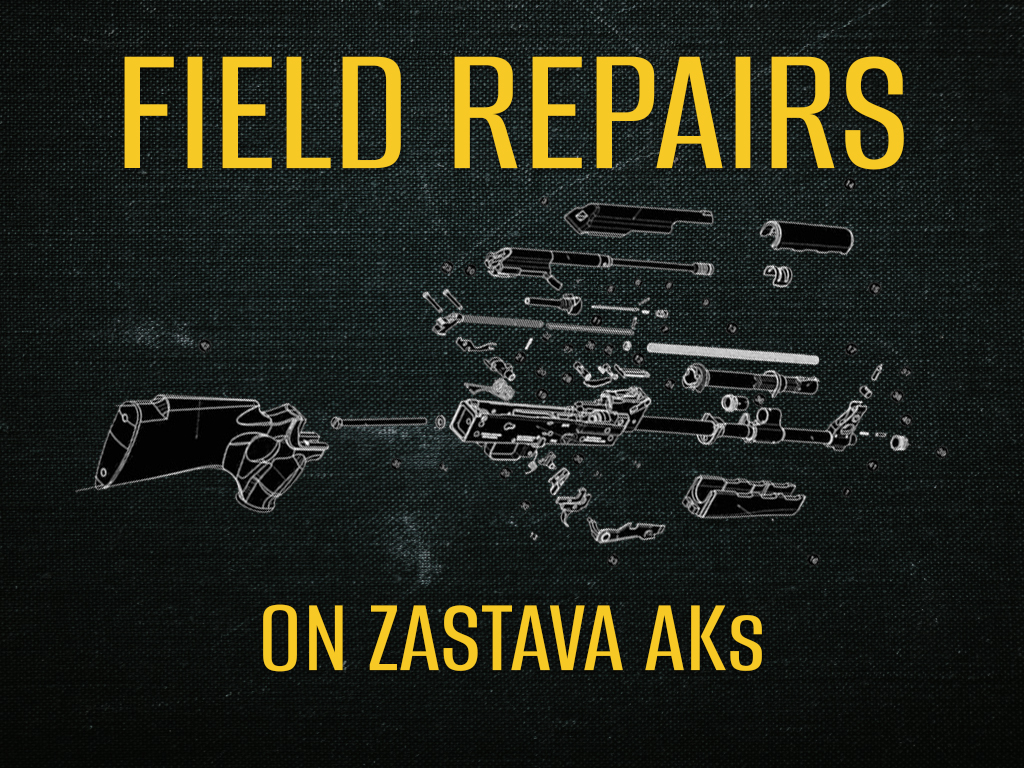
You buy a Zastava AK because you want a rifle that shrugs off mud, dust, and questionable gas station snacks. But even a tough ZPAP has small parts that deserve attention. With a compact kit and a bit of know-how, you handle many field repairs on Zastava AKs instead of cutting range time short.
Below, you get a practical guide that stays 100% Zastava: rifles, parts, lube, and supporting articles.
Know Your Zastava AK Platform
Before any repairs on Zastava AKs, you want a clear picture of what sits in front of you.
Zastava builds the ZPAPM70, M90, and M77 on a stout 1.5 mm bulged trunnion receiver with cold hammer forged barrels, which gives you serious durability and predictable accuracy in rough use.
That strong foundation already stacks the deck in your favor when you fix small issues in the field.
For classic 7.62×39 work, you keep a standard wood-stock ZPAPM70 or an underfolder ZPAPM70UF as a rugged base that still stays handy in vehicles or tight spaces.
For a broader view of the lineup, you browse the Zastava AKs page and see how much commonality these rifles share.
Always pair this article with the ZPAP owner’s manual, especially for field strip steps and sight adjustment.
Build A Smart Small Tool Roll
You do not need a full bench. For most realistic repairs on Zastava AKs, a compact pouch covers the basics:
- Compact multi-bit screwdriver with flat, Phillips, and Torx bits
- Front sight tool for elevation and windage adjustments
- Small brass or nylon hammer
- Two or three punches in AK-friendly sizes
- Foldable multi-tool with pliers and a file
- Short cleaning rod sections or a packable bore snake
- Nylon brush and a small rag
- A few cable ties and a short strip of electrical tape
The Zastava firearm parts section breaks out dedicated AK components, and the ZPAPM70 – parts page includes extractors, extractor springs, recoil springs, firing pins, and selector levers with an exploded view PDF.
For lube and cleaning in one bottle, you drop in DRNCH CLP. It’s a synthetic CLP that covers cleaning, lubrication, and short-term preservation in field conditions, and it plays nicely with modern polymer and classic wood furniture.
That single bottle keeps your tool roll compact and still gives you real maintenance options.
Safety And Function Checks Before Any Fix
Before any repairs on Zastava AKs, you treat safety as step zero:
- Point the muzzle in a safe direction.
- Engage the safety.
- Remove the magazine.
- Run the bolt to the rear and lock it open with the safety notch if your selector includes one.
- Visually and physically check the chamber and magazine well.
Once the rifle sits clear, you field strip it by the book: dust cover, recoil spring, bolt carrier and bolt, and gas tube, in that order, as the manual explains.
Simple Wins: Screws, Furniture, And Mounts
Plenty of “malfunctions” trace back to loose screws and wobbly parts. Your tool roll fixes many of those quickly.
Stock and grip hardware
Zastava offers dedicated M70 and M77 furniture sets and hardware, and those sets rely on straightforward screws and bolts.
With your screwdriver and a bit of patience, you:
- Snug the stock screw if you feel any wiggle at the shoulder
- Tighten the ZPAP pistol grip bolt if the grip rotates or shifts
That small correction removes uncomfortable flex and keeps your sight picture stable during rapid strings.
Handguards and rails
If you run one of the quad-rail ZPAPM70 variants or other rail trims, you sometimes re-check rail and accessory screws after heavy sessions.
Your multi-bit driver handles that in minutes. Tight hardware helps optics hold zero and keeps lights and slings exactly where you want them.
For upgrades down the line, the ZPAP M70 accessories guide walks through stocks, handguards, scope mounts, and other parts that bolt on without drama.
Sight And Zero Tweaks In The Field
You do not always return home between zero checks. Sometimes you notice impacts drift on a hunt or after a long range day. Field-friendly repairs on Zastava AKs include small sight corrections.
You adjust the front sight with a special tool, and the rear sight slide changes elevation in 100-meter steps.
Your front sight tool and a reasonable zero distance do the heavy lifting:
- You center windage by moving the front sight drum left or right.
- You raise or lower the front post for elevation.
- You confirm at realistic distances, as Zastava suggests for practical use in guides like the ZPAP92 review, which recommends a 25-yard zero for short setups.
You avoid extreme changes in the field. Big shifts wait for a calm bench session.
Wear Items: Extractor, Firing Pin, And Recoil Spring
Zastava rifles already start with robust bolts, chrome-lined barrels, and strong receivers, which keep wear slow and predictable.
Still, serious use and old surplus ammo eventually push small parts to the limit.
For many owners, smart repairs on Zastava AKs focus on three pieces:
- Extractor and extractor spring
- Firing pin
- Recoil spring and guide
The ZPAP M70 accessories article calls out extractors and firing pins as common wear items that owners replace with factory-spec components.
With your punches and small hammer, you:
- Drive out the retaining pin as the manual and parts diagram show
- Swap the worn extractor or firing pin for the new one
- Seat the new spring correctly
- Reinstall the retaining pin, then test by hand for free movement
You never force parts. If anything binds or refuses to seat exactly like the factory component, you stop and pass the rifle to Zastava warranty support.
Magazines, Catch, And Trigger Group Checks
Plenty of “feed issues” actually come from magazines. Before any deep repairs on Zastava AKs, you:
- Inspect each mag body for dents or cracks
- Check feed lips for obvious damage
- Look at follower travel and spring tension
If one magazine causes trouble while others run perfectly, you mark it and retire it.
Light surface grime and carbon clear with a brush and DRNCH. If the spring feels weak or the catch no longer holds magazines with authority, a replacement from the Zastava parts catalog drops in under careful hands.
Trigger group checks stay simple: you look for broken or chipped contact surfaces and proper pin seating. Anything more advanced than a straight “drop-in” part swap belongs on a bench at home or at an authorized service shop.
Field Cleaning And Lube
A lot of “repair” work disappears after a good clean. That process adapts perfectly to a field environment.
Your field version might look like this:
- Field strip.
- Run a bore snake with DRNCH from chamber to muzzle.
- Brush bolt face, locking surfaces, and extractor claw.
- Wipe the inside of the receiver and the top cover.
- Apply a light coat of DRNCH on high-wear surfaces: rails, bolt lugs, carrier rails, and hammer contact points.
Conclusion
A tough Zastava AK already starts far ahead of the curve: strong receivers, chrome-lined barrels, quality parts, and a deep catalog of factory spares and accessories.
When you add a compact tool roll, a bottle of DRNCH CLP, and a handful of common wear parts, you unlock a huge range of practical repairs on Zastava AKs.
You tighten a stock screw instead of “living with” a wobbly stock. You drop in a fresh extractor instead of cutting a hunt short. You correct a drifting zero instead of guessing your holds.