A large ammunition budget can make range day more fun, but it does not automatically create better rifle fundamentals. Skill comes from correct, repeatable actions—not from turning money into noise at record speed.
With focused dry practice, clear goals, and a sensible live-fire plan, you can improve stance, grip, sight control, trigger control, and follow-through without emptying every box in your range bag.
Put Safety at the Center of Every Practice Session
Safety forms the base of all rifle fundamentals. Before dry practice, remove all ammunition from the room. Remove the magazine, open the action, and check the chamber. Check it once more. Confidence feels great, but a chamber check has better credentials.
Choose a safe direction that can stop a projectile. Follow the instructions for your exact rifle on the official Zastava Arms owner’s manuals page. Keep your finger outside the trigger guard until your practice step calls for a trigger press.
Give Each Session One Clear Purpose
Do not try to fix every skill at once. Pick one part of your rifle fundamentals and work on it for ten focused minutes.
One session can focus on the rifle mount. Another can cover sight alignment. A third can address trigger control. Short sessions help you notice small errors before they turn into habits. They also prevent the classic 45-minute dry-practice marathon that ends with tired arms and deep questions about why shoulders exist.
Use ten to twenty careful repetitions. Stop when your form starts to slip.
Build a Stable, Natural Stance
Start with your feet about shoulder-width apart. Place your support-side foot slightly forward and keep a soft bend in both knees. Lean your upper body slightly toward the target. Avoid a deep backward lean, since that position gives recoil permission to boss you around.
Keep your shoulders relaxed. Your body should support the rifle without excess tension. Test the stance with your eyes closed. Mount the rifle, settle into position, and open your eyes. If the sights point far from the target, adjust your feet rather than twist your torso.
Make the Rifle Mount Repeatable
A consistent mount gives the rest of your rifle fundamentals a dependable starting point. Bring the rifle toward your face and shoulder. Do not drop your head far enough to meet the stock halfway.
Place the stock in the same shoulder position each time. Rest your cheek at the same point and confirm a clear sight picture. The ZPAPM70 stock-fit guide explains how stock length, cheek position, and balance support comfort and control.
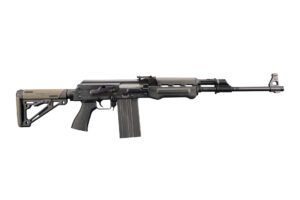
The ZPAPM70 Semi-Automatic Sporting Rifle provides a rugged, dependable platform on which owners can develop these repeatable habits.
Use Firm Grip Pressure Without a Wrestling Match
Your grip should control the rifle without excess tension. Hold the pistol grip firmly, but do not squeeze it as if it owes you money. Excess pressure can disturb the sights and tire your hands.
Pull the stock gently into your shoulder with the support hand. Keep your elbows in a natural position. Apply the same pressure during every repetition. Consistency matters more than brute strength.
Include selector use in the routine. Start with the selector on safe. Move it to fire only after the sights reach your safe target. Return it to safe when the repetition ends.
Refine Sight Alignment and Sight Picture
For iron sights, center the front sight within the rear sight and keep the top edges level. Place that aligned view on the chosen target. Use a small, precise aim point instead of a target the size of a pizza box.
During dry practice, watch the sights as you mount the rifle. They should arrive close to the target without a search party. If they appear high, low, or to one side, examine your cheek position and shoulder contact.
Good rifle fundamentals reduce needless movement before the shot. The sights should settle naturally, not wander around like they forgot why they came.
Learn the Trigger Without Spending a Round
Safe dry practice offers an excellent way to study trigger control. Place the pad of your trigger finger on the trigger and press straight to the rear. Watch the sights throughout the press. If they jump sideways, adjust finger placement or reduce grip tension.
The Zastava Arms guide to Zastava AK trigger feel explains take-up, the wall, the break, and reset. Learn each stage slowly. Speed can wait. Clean control deserves first place.
After the trigger breaks, keep the sights on target. That short pause develops follow-through and prevents an immediate head lift.
Make Every Live Round Answer a Question
Arrive at the range with a written plan. A simple 30-round session can provide plenty of useful work:
- Use five rounds to confirm sights or zero.
- Fire four careful five-round groups.
- Use five final rounds to confirm the session’s main lesson.
Pause between groups. Check the target and write one note. Did the group shift left? Did the sights move during the trigger press? Did your cheek position change?
Do not fire another magazine simply because silence feels awkward. Every round should test one part of your rifle fundamentals.
Record Results and Repeat What Works
Keep a simple range log with the date, distance, rifle, ammunition, position, group size, and one observation. Zastava Arms USA’s progress-tracking guide shows how a straightforward record can reveal real improvement.
Your notes may show that dry practice reduced horizontal spread or that a more consistent cheek position helped your groups. That evidence tells you what to practice next.
Build Skill Through Quality, Not Volume
Better rifle fundamentals come from attention, repetition, and honest feedback. Use dry practice to refine the mount, stance, grip, sights, trigger press, selector use, and follow-through. Then use a modest live-fire session to confirm those habits.
A quality Zastava Arms rifle gives you a reliable foundation. Bring the discipline, keep the practice plan simple, and make every round count.