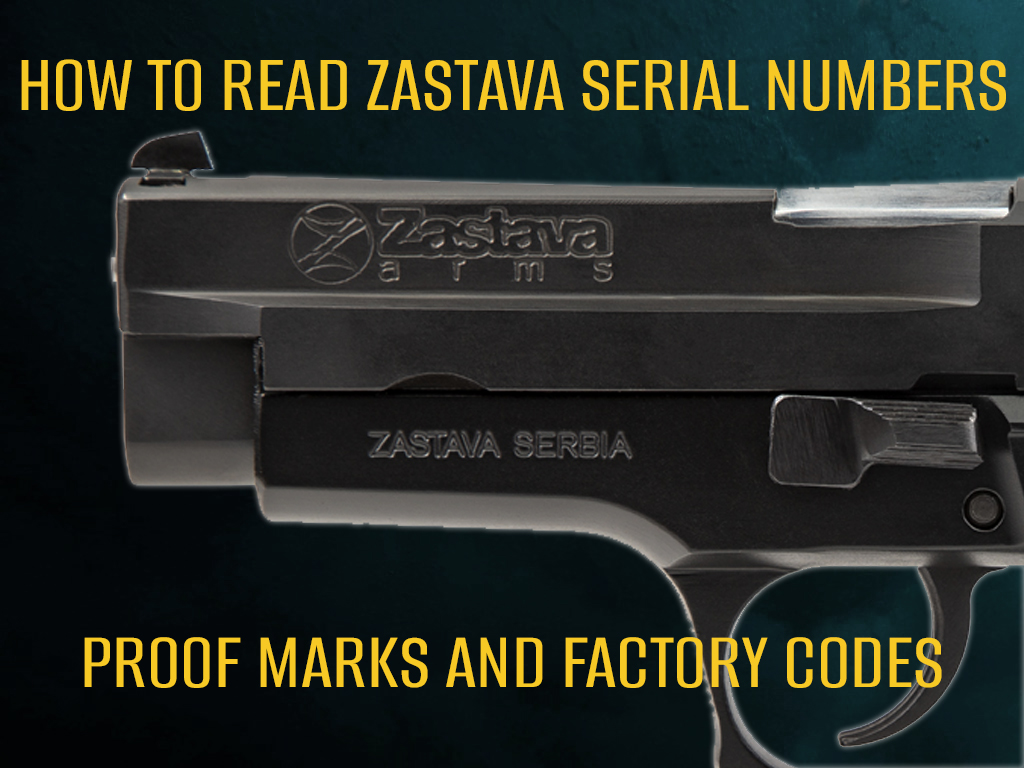
You stare at tiny stamps on your rifle, and they stare back. Relax. Zastava did not hide a secret math exam in that steel. With a bit of structure, you can understand Zastava serial numbers, proof marks, and factory codes well enough to document your gun, protect it, and appreciate the history behind it.
Why Zastava Serial Numbers Matter
Zastava builds rifles and pistols in Kragujevac, Serbia, with a lineage that reaches back to the 1850s and includes millions of service and sporting guns around the world.
Because of that long run, Zastava serial numbers do serious work:
- Identify your exact firearm for warranty and service
- Tie the gun to import paperwork and ATF records
- Help the police and insurers if someone steals it
- Help collectors match bolts, carriers, covers, and furniture to the right receiver
Zastava Arms USA even posts guidance on how to record serial numbers and handle reports when you lose a serialized part like a suppressor, which shows how central these numbers stay in real-world problems.
So, step one: take them seriously. Step two: learn what you can (and cannot) pull from them.
Where To Find Markings On Modern Zastava Rifles
Take a current ZPAPM70 or other Zastava AK from Zastava Arms USA and walk around the metal.
You usually find:
- Receiver left side:
- Model code: for example, “ZPAPM70”
- Caliber
- Import mark: “Zastava Arms USA” plus city and state
- The main serial number
- Trunnion/receiver area over the trunnion:
- Zastava factory markings often have the same serial number repeated. Collectors note that modern rifles place the “real” Zastava marks on the bulged receiver instead of the trunnion face.
- Bolt, bolt carrier, dust cover, and sometimes the gas tube:
- Short “matching” serials or the last few digits of the main number
- Barrel:
- Caliber
- Proof and inspection marks near the chamber
Write all of this down once. You do not want to squint at tiny digits with a flashlight at 2 a.m. after a range trip.
If you want a concrete example while you read, open a product page like the ZPAPM70 ZR7762QR and compare the visible receiver text to your own rifle.
Factory Codes, Model Codes, And Logos
Zastava uses several layers of “identity” on the steel:
- Company name and logo – the modern circular Zastava mark and “Zastava Arms” text
- Model code – ZPAPM70, M90, M77, M57, and so on
- Caliber – 7.62×39, 5.56 NATO, .308 Winchester, etc.
- Importer line – “Zastava Arms USA” with the U.S. location
- Serial number – the unique ID for that receiver
On older Mauser-pattern rifles, you also see factory codes such as “Preduzeće 44” on the receiver ring. That mark points to the Zastava facility in Kragujevac and appears on refurbished M98/48 and related rifles that Yugoslavia adopted after World War II.
So in short: the big text tells you who made the gun and what model you hold; Zastava serial numbers tell you which one of that model you own.
What Zastava Serial Numbers Actually Tell You
Collectors love a good “secret code,” but Zastava likes straightforward engineering more than puzzles.
For modern commercial rifles and pistols (ZPAP series, current M70 bolt-actions, handguns that move through Zastava Arms USA):
- The serials work as unique identifiers, not as public date codes.
- Zastava does not publish a year-by-year decoding chart.
- Serial ranges still help you group guns by era, but you need outside references, sales records, or direct confirmation from Zastava Arms USA.
For older Yugoslav Mauser-pattern rifles like the M48 and M98/48:
- The receiver top usually shows the Yugoslav crest.
- The left side often shows “Mod. 98/48” or “M48”.
- Serial blocks and letter prefixes tend to sort into date ranges, and “Preduzeće 44” identifies the Kragujevac facility.
If you want a precise production year for a specific rifle, the safest route stays simple: contact Zastava Arms or Zastava Arms USA with the full serial number and model, then ask for any information they can share.
Proof Marks From Kragujevac: Safety Stamps, Not Secret Runes
Every serious manufacturer sends guns through a proof house. Yugoslavia – and later Serbia – did the same thing in Kragujevac, the same city where Zastava builds its firearms.
Historically, the Kragujevac proof house worked under the international C.I.P. framework and used specific proof marks to show that a firearm passed high-pressure tests.
Today, the national proof agency in Serbia still tests guns and stamps them before they leave the country.
On a typical Zastava, you may see:
- A small crest or shield near the barrel shank
- Tiny symbols or letters close to the chamber area
- Additional inspection stamps on the receiver or bolt
Treat these as safety stamps. They confirm that someone in Kragujevac fired proof loads through that barrel and signed off on it. They usually do not hide a date or “special forces” story inside the symbol, no matter what your buddy at the range swears.
Protect Your Investment With Better Recordkeeping
You already saw how much work Zastava serial numbers do. To keep life simple later:
- Keep a single document with serials for all your Zastava rifles, pistols, and suppressors.
- Store digital photos with that list; zoomed-in serial shots help a lot.
- Save receipts, owner’s manuals, and copies of any warranty registration.
- Read Zastava Arms USA’s article on lost or stolen suppressors and serial number tips so you know the process before you ever need it.
One important note: never alter, deface, or remove a serial number. That step usually violates the law, destroys value, and turns a nice Serbian rifle into a very expensive wall decoration.
Zastava Heritage In Your Hands
Those tiny characters on the receiver link your rifle to a factory with more than a century and a half of gunmaking behind it.
Zastava serial numbers, factory codes, and proof marks help you trace that link, prove authenticity, and keep your rifle documented for a long and happy life in your safe.
Next time someone at the range squints at their ZPAP and says, “I have no idea what all these stamps mean,” you can smile, flip your rifle over, and walk them through the story right off the metal.