If your rifle could talk, your ZPAP would ask for two things: solid ammo and smart lubrication. This ZPAP lubrication guide keeps it simple: put lube where metal rubs, keep it light where carbon and dust like to party, and you’ll get that smooth “runs like it wants to live” feel every time.
Zastava builds the ZPAP platform tough, with a stout 1.5 mm receiver, a bulged trunnion, and a rugged barrel, so you don’t need a complicated ritual—just a consistent one.
The Big Idea: Friction Zones Vs. Grit Zones
Every ZPAP lubrication guide boils down to this:
- Friction zones need a thin film so parts glide instead of grind.
- Grit zones want less oil, because oil can grab dust and turn it into a sticky paste.
That means you aim for a light sheen, not a glossy “donut glaze” finish. Zastava’s own cleaning routine calls out the same concept: clean the rails and cam tracks, then add a thin film—“less lube beats excess,” because a light sheen attracts less grit.
Start With Safety And A Fast Field Strip
Before any lube touches metal, follow the simple safety checks Zastava lays out: muzzle in a safe direction, remove the magazine, lock the bolt back, inspect the chamber and bolt face, then continue.
For a normal range day, you only need a basic field strip—dust cover, recoil spring, carrier/bolt, gas tube—so you can access the key contact points and wipe them clean.
If you want the full Zastava routine, keep the owner’s manual handy.
Pick A Purpose-Built Cleaner/Lube From Zastava
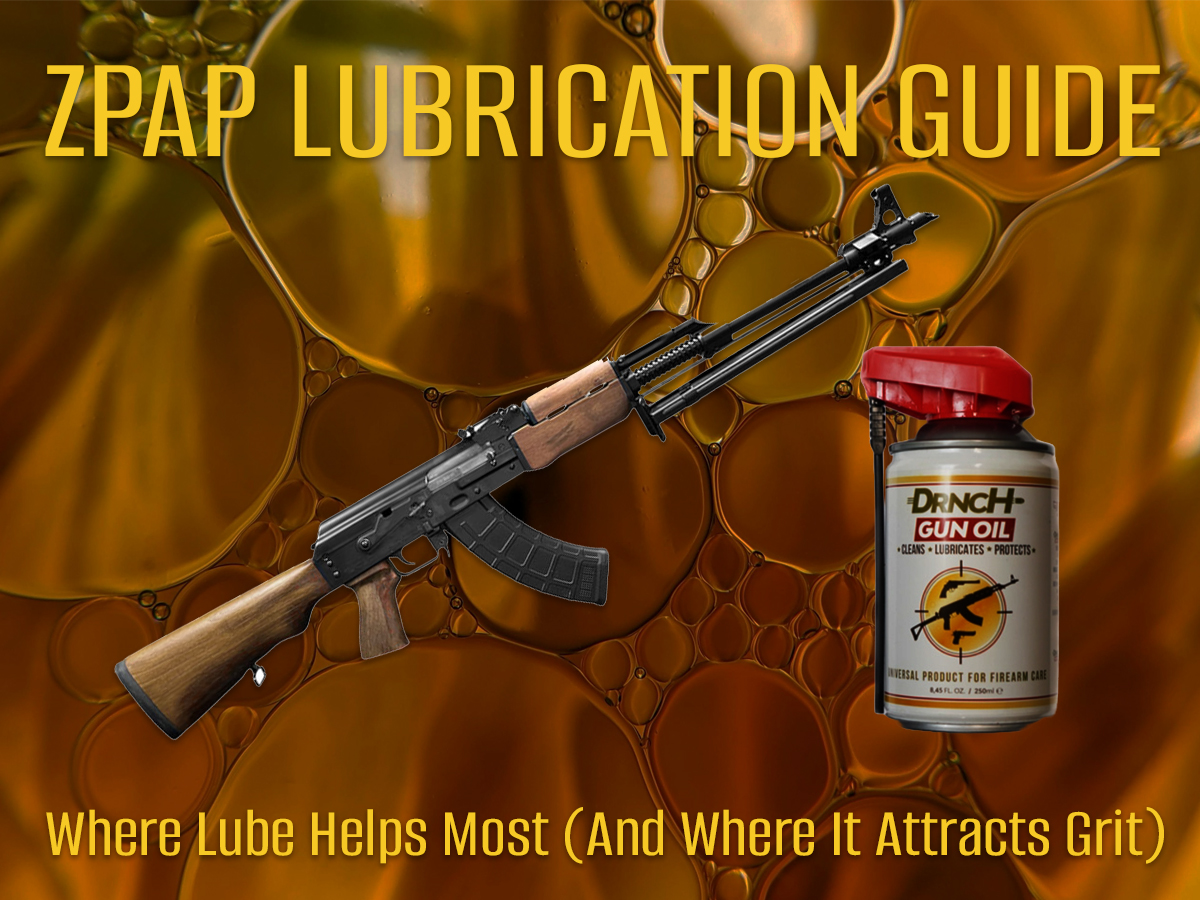
ZastavaArms offers DRNCH, a cleaner/lube/protectant built for regular maintenance and quick routines.
- Browse Zastava’s Gun Lubricant And Cleaner (DRNCH) options (single can and packs).
- If you like to stay stocked, the DRNCH 6 Pack gives you bench supply plus “range bag spare” peace of mind.
Zastava describes DRNCH as a highly penetrating synthetic liquid that supports cleaning, lubrication, and short-term preservation, while also resisting freezing and helping at low temperatures.
Where Lube Helps Most On A ZPAP
Here’s the “money map” for this ZPAP lubrication guide—the places where a thin film pays you back fast.
Bolt Carrier Rails And Receiver Rails
These rails handle constant metal-on-metal contact every cycle. After you wipe them clean, put a thin film on:
- Carrier rail surfaces
- Receiver rails where the carrier rides
Zastava’s post-range routine calls out the rails and cam tracks specifically: clean, then add a thin film, and keep it light.
Bolt Lugs, Bolt Body, And Cam Path
The bolt rotates and locks under load, so you want a light film on:
- Bolt body where it rides inside the carrier
- Locking lugs (light coat, then wipe to a sheen)
- The carrier’s cam track that drives bolt rotation
Tip: after you apply lube, run the action a few times by hand, then wipe any squeeze-out. The parts will “self-distribute” the film where they need it.
Recoil Spring Assembly Contact Points
Put a light film where the recoil spring assembly contacts and rides. Don’t soak it—just keep it slick enough to resist friction and noise.
Trigger And Hammer Contact Surfaces
Inside the fire-control area, avoid heavy oil. Instead:
- Use a tiny drop on key contact edges (hammer/trigger engagement surfaces)
- Spread it thin, then wipe any excess
This keeps the pull consistent without creating a dust magnet in the receiver.
Where To Keep It Light So Grit Stays Out
This part of the ZPAP lubrication guide saves you from the “why does my rifle feel crunchy” mystery.
Gas System: Piston And Gas Tube
Zastava’s routine focuses on cleaning here—wipe the piston, run a wet patch through the gas tube—because carbon collects fast.
After you clean, keep lubrication minimal in the gas system. A heavy oil layer can hold carbon and dust. Think “clean and mostly dry,” not “wet and shiny.”
Bolt Face And Extractor Area
Zastava specifically calls out carbon around the firing pin hole and extractor groove, plus the extractor claw area.
These spots benefit more from brushing and wiping than from extra lube. Use lube only as a micro-film after cleaning—enough to resist corrosion, not enough to pool.
Chamber And Bore: Protect, Don’t Flood
Zastava recommends finishing the bore with a lightly oiled patch to protect steel without leaving a pool.
You want protection, but you also want a dry, clear bore before you shoot.
Cold Weather Note: Adjust Your Lube Plan
Zastava’s manuals include a practical cold-weather rule: below 0°C (32°F), avoid lubrication oil and use a dry lubricant sparingly.
So if you shoot in real winter conditions, keep this ZPAP lubrication guide flexible: go lighter, wipe more, and avoid thick oil that can slow parts down.
Two Smart Warnings That Keep Your ZPAP Happy
Zastava’s manual gives two easy, high-value cautions:
- Don’t let oil/grease obstruct the bore. Even partial obstruction can cause damage and injury.
- Do not apply or spray lubricants directly on ammunition.
These rules keep your routine safe and your ZPAP reliable.