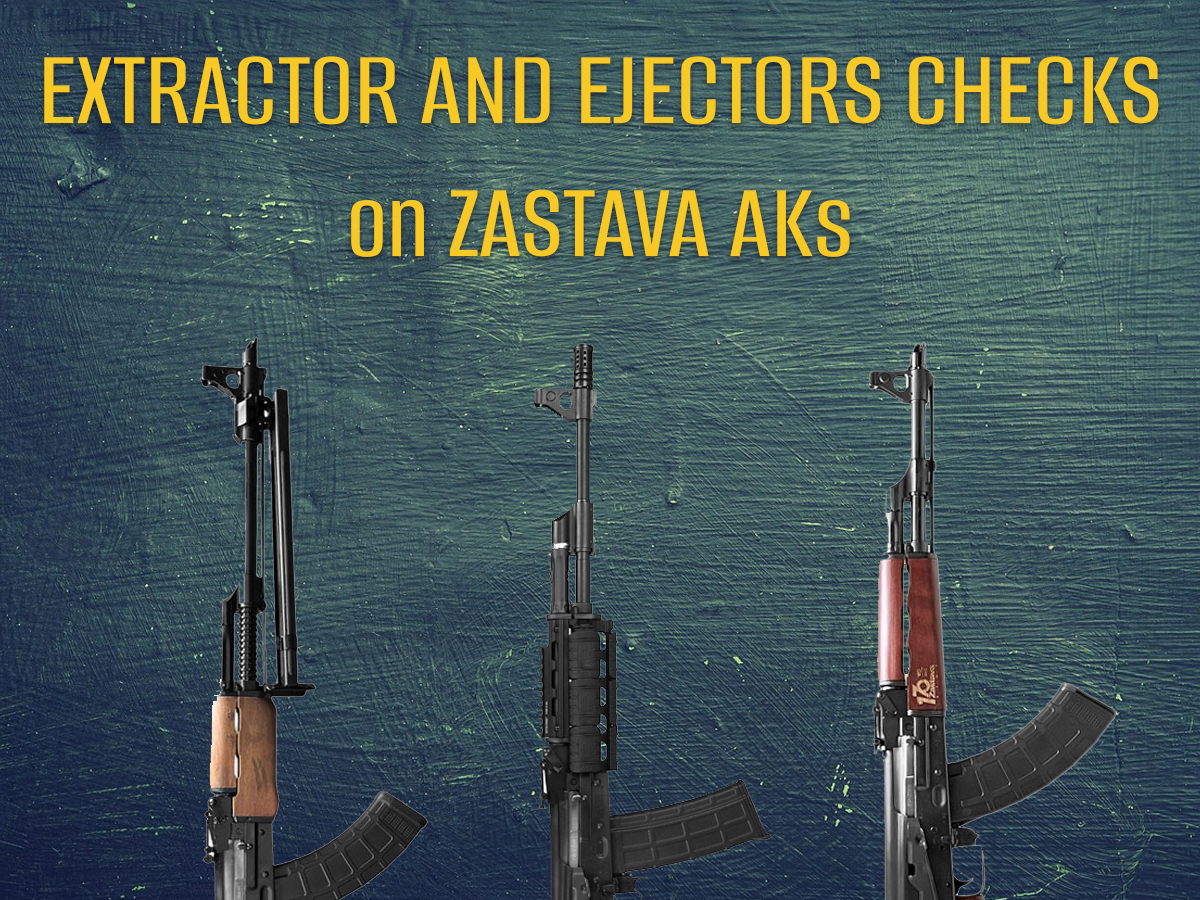
If your Zastava AK runs like a sewing machine (the cool kind, not the “why is there thread in my coffee” kind), thank two small heroes: the extractor and the ejector. These parts do the unglamorous job—pull the empty case out, kick it out of the rifle, and keep your next round on schedule. When you stay consistent with extractor and ejector checks, your ZPAP rewards you with smooth cycling and confidence that feels almost unfair.
Let’s walk through simple, repeatable extractor and ejector checks you can do at the bench with basic tools, a little light, and a reasonable amount of self-control (yes, you can still “just rack it one more time” afterward).
Know What Each Part Does (So Your Checks Make Sense)
The extractor lives on the bolt. It hooks the rim of the cartridge case and pulls it out of the chamber as the bolt travels rearward.
The ejector sits in the receiver and knocks the case sideways as the bolt moves back far enough for contact, which sends the case out of the ejection port. That extractor/ejector teamwork defines the Kalashnikov pattern and helps explain why the platform earns its reputation for reliability.
On Zastava ZPAP rifles, you can see how central the extractor is just by looking at factory parts diagrams: Zastava lists the extractor and extractor spring as individual service parts on the ZPAP M70 parts breakdown.
Safety First, Because Fingers And Steel Need A Peace Treaty
Before any extractor and ejector checks, clear the rifle the right way:
- Point in a safe direction.
- Remove the magazine.
- Pull the bolt to the rear and visually inspect the chamber and receiver.
Zastava’s own manuals describe this clear-and-check routine and note that cycling the bolt should eject a chambered cartridge through the ejection port.
The Tools You Actually Need (Spoiler: Not A Lab Coat)
For solid extractor and ejector checks, grab:
- A bright light (phone light works)
- A nylon brush
- A rag or patches
- A wooden pick or polymer tool (avoid scratching steel)
- Quality cleaner/lube such as DRNCH
If you like to keep supplies stocked, DRNCH 6 PACK exists for people who treat maintenance like a lifestyle choice.
Extractor And Ejector Checks Start With A Quick Field Strip
You do not need a full teardown. Zastava’s ZPAP field strip stays fast: remove the dust cover, recoil spring, carrier/bolt, then rotate the bolt out of the carrier. The Zastava blog lays out this exact flow in its cleaning routine and calls out the extractor claw as a key fouling area.
If you want a clean, verified post-range routine that pairs perfectly with extractor and ejector checks, use Cleaning a ZPAP After a Range Day as your baseline.
Extractor Checks: What To Look At And What “Good” Looks Like
1) Inspect The Extractor Claw Face And Hook
Look at the claw where it grabs the case rim. You want crisp edges and a clean hook surface. Carbon loves to pack into that tight nook under the claw, and Zastava specifically calls out the extractor claw area during bolt cleaning.
Quick test: With the bolt in your hand, press the extractor in and let it return. It should move smoothly and snap back with authority.
2) Check Extractor Spring Tension
Tension drives consistency. The spring should give you a firm “bite” when the extractor engages the case rim. Factory diagrams show the extractor spring as its own replaceable component on the ZPAP platform, which makes proactive maintenance easy.
If you ever want factory-spec parts support for this area, Zastava sells platform-specific parts menus like ZPAPM70 – parts (handy when you want to source an extractor spring without guesswork).
3) Look For Fouling In The Extractor Groove And Bolt Face
Carbon can build up around the extractor groove and bolt face. Use a nylon brush, a patch, and a small pick to clean the channel. Zastava’s cleaning guide highlights the bolt face and extractor groove as priority contact points.
A light film of DRNCH on the bolt body helps parts move smoothly without attracting a gritty mess.
Ejector Checks: The Receiver’s Quiet Workhorse
On AK-pattern rifles, the ejector acts as a fixed surface that strikes the case and “flicks” it out as the bolt retracts.
1) Inspect The Ejector Tip Through The Magwell
Look through the magwell and find the ejector. You want a clean, defined edge. Wipe it down, then brush the surrounding rails. Zastava’s ZPAP cleaning routine calls out the ejector as a specific brush point inside the receiver.
2) Check For Smooth Bolt Travel Past The Ejector
With the rifle still field stripped, slide the bolt carrier group into the receiver (no recoil spring needed for this step) and move it slowly. You want clean travel with consistent contact where the bolt passes the ejector area.
3) Keep The Ejector Area Clean, Not Drenched
Oil can migrate into places it does not need to live. Zastava’s cleaning routine favors a thin film on key friction points and avoids the “dip the whole rifle in lube” approach.
A Simple Function Test That Completes Extractor And Ejector Checks
After reassembly:
- Rack the action a few times. It should feel smooth and positive.
- Do a standard safety/function check (safe = no hammer drop, fire = hammer drops, reset feels clean).
This quick routine pairs well with regular cleaning and helps you keep extractor and ejector checks consistent instead of “I’ll do it after the next range trip” (famous last words).